Portfolio 📂
Education🎓 • Publications📃 • Experiences🛰️ • Projects🛠️
Curriculum Vitae (CV) 📄: View & Download PDF | Last Updated: 07/2026
Education 🎓
California Institute of Technology, CMS, Ph.D. (In-progress)
California Institute of Technology, EE, M.S.
Cornell University, ECE, B.S.
Publications 📃
(*: equal contribution)
Abstract
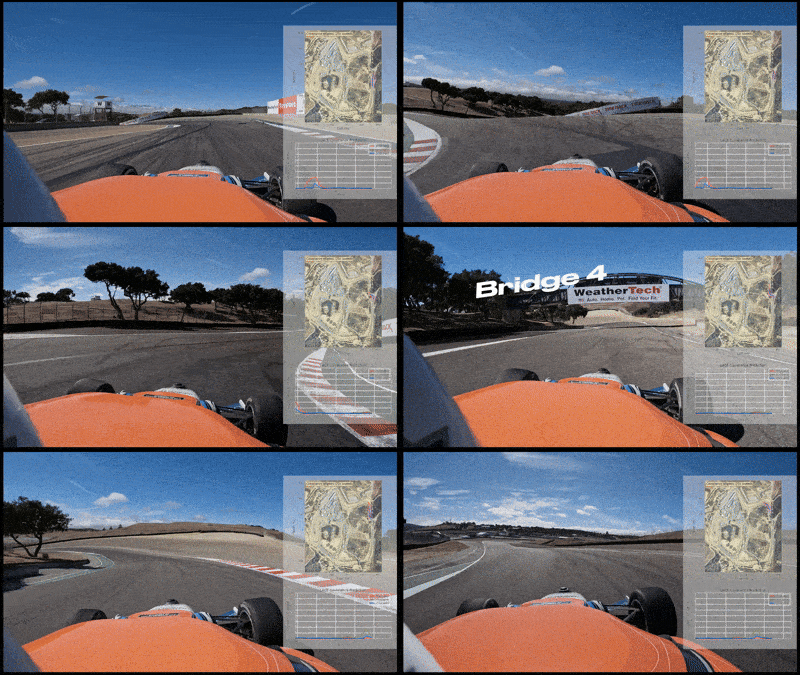
Ensuring accurate and stable state estimation is a challenging task crucial to safety-critical domains such as high-speed autonomous racing, where measurement uncertainty must be both adaptive to the environment and temporally smooth for control. In this work, we develop a learning-based framework, LACE, capable of directly modeling the temporal dynamics of GNSS measurement covariance. We model the covariance evolution as an exponentially stable dynamical system where a deep neural network (DNN) learns to predict the system’s process noise from environmental features through an attention mechanism. By using contraction-based stability and systematically imposing spectral constraints, we formally provide guarantees of exponential stability and smoothness for the resulting covariance dynamics. We validate our approach on an AV-24 autonomous racecar, demonstrating improved localization performance and smoother covariance estimates in challenging, GNSS-degraded environments. Our results highlight the promise of dynamically modeling the perceived uncertainty in state estimation problems that are tightly coupled with control sensitivity.
Abstract
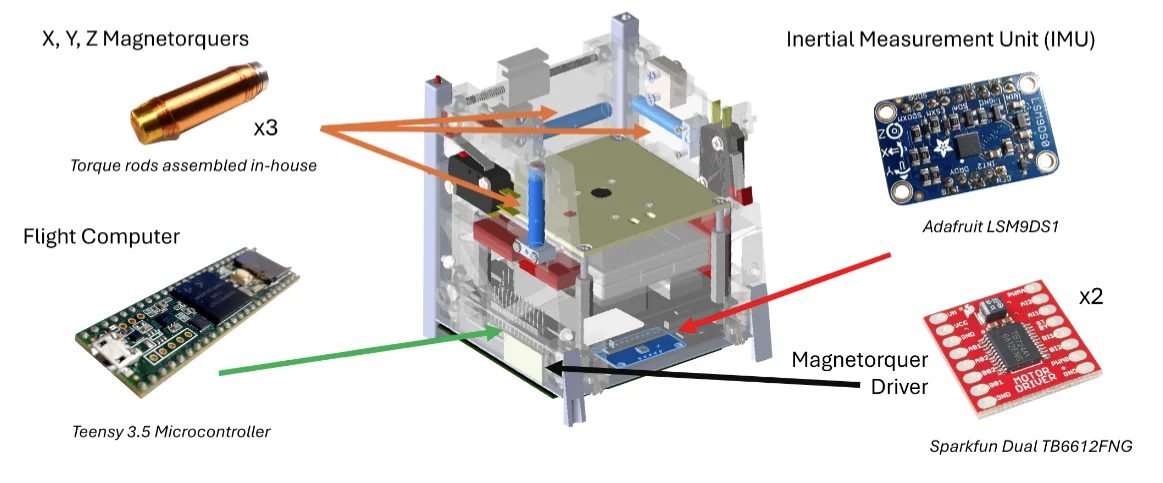
This paper presents the implementation of CubeSat attitude control algorithms using commercial off the shelf (COTS) hardware. Cornell’s Alpha CubeSat seeks to spin-stabilize by relying on only magnetorquer outputs and IMU inputs. Extensive software development and testing is carried out to overcome these hardware limitations. This paper shares tools, techniques, and niche considerations when bringing the control algorithm from simulation to hardware-in-the-loop (HITL) testing with embedded Flight Software. In-depth approaches for magnetometer filtering are discussed, along with software implementation decisions for safe mission operations.
Abstract
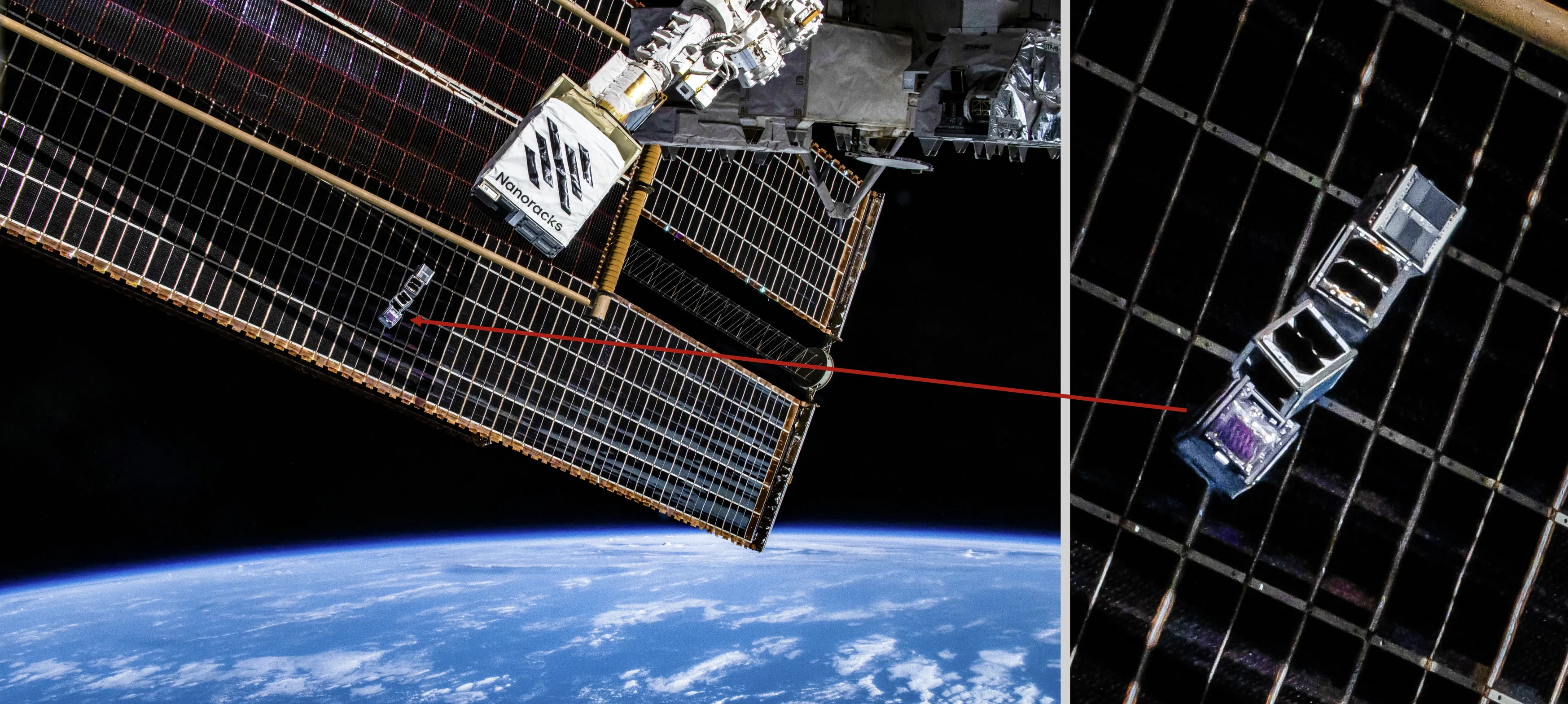
Alpha CubeSat is a mission led by students of the Cornell University Space Systems Design Studio to deploy a ChipSat-equipped free-flying retroreflective light sail in LEO. The spacecraft launched with NASA CSLI on the NG-23 ISS cargo resupply mission on September 14th, 2025 and deployed from the space station as part of NRCSD-29 on December 2nd, 2025. The mission was a success, with all primary mission objectives accomplished. This paper presents the mission results, with insights into the critical decision-making made within the first 48hrs of the mission to deploy and establish contact with the light sail payload. From conception to deorbit, this CubeSat program spanned 10 years, created hands-on engineering opportunities for over 100 students, and engaged thousands of people from around the world.
Abstract
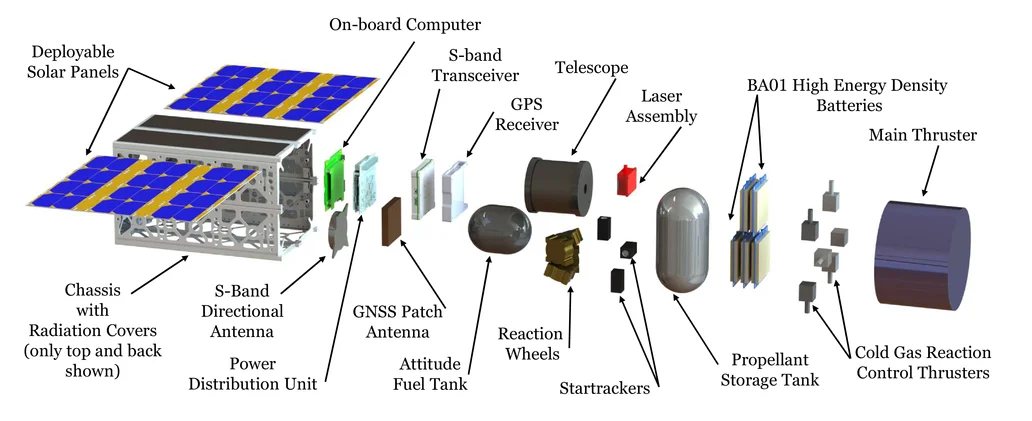
This paper presents the implementation of CubeSat attitude control algorithms using commercial off the shelf (COTS) hardware. Cornell’s Alpha CubeSat seeks to spin-stabilize by relying on only magnetorquer outputs and IMU inputs. Extensive software development and testing is carried out to overcome these hardware limitations. This paper shares tools, techniques, and niche considerations when bringing the control algorithm from simulation to hardware-in-the-loop (HITL) testing with embedded Flight Software. In-depth approaches for magnetometer filtering are discussed, along with software implementation decisions for safe mission operations.
Experiences 🛰️
SSDS, Alpha Mission, Attitude Control System (ACS)
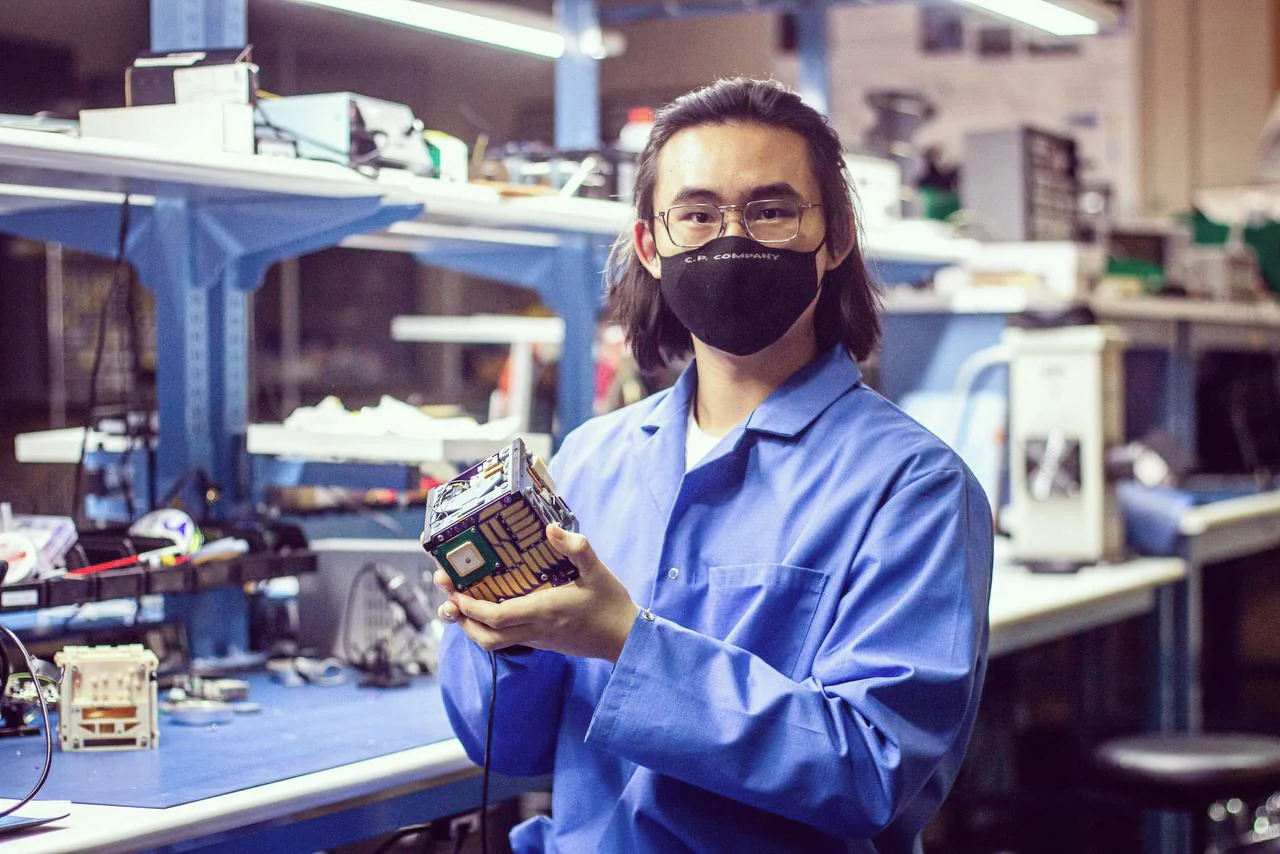
I worked on a 1U CubeSat projected to be launched in 2024, the Alpha Cubesat, advised by Prof. Mason Peck at Cornell Space System Design Studio (SSDS). I developed the Attitude Control System (ACS) in SIMULINK, deployed with C++, designed Extended Kalman Filters (EKF) and moving kernel filters for attitude determination and denoising, analyzed noise characteristics, optimized parameters using Monte Carlo methods, and debugged issues with sensing, actuation, and controller timing. I am integrated the attitude control algorithms into the overall flight software, with hardware-in-the-loop verification.
Research Summary • Github Repo
Cornell Motion Studio, Drone Designer
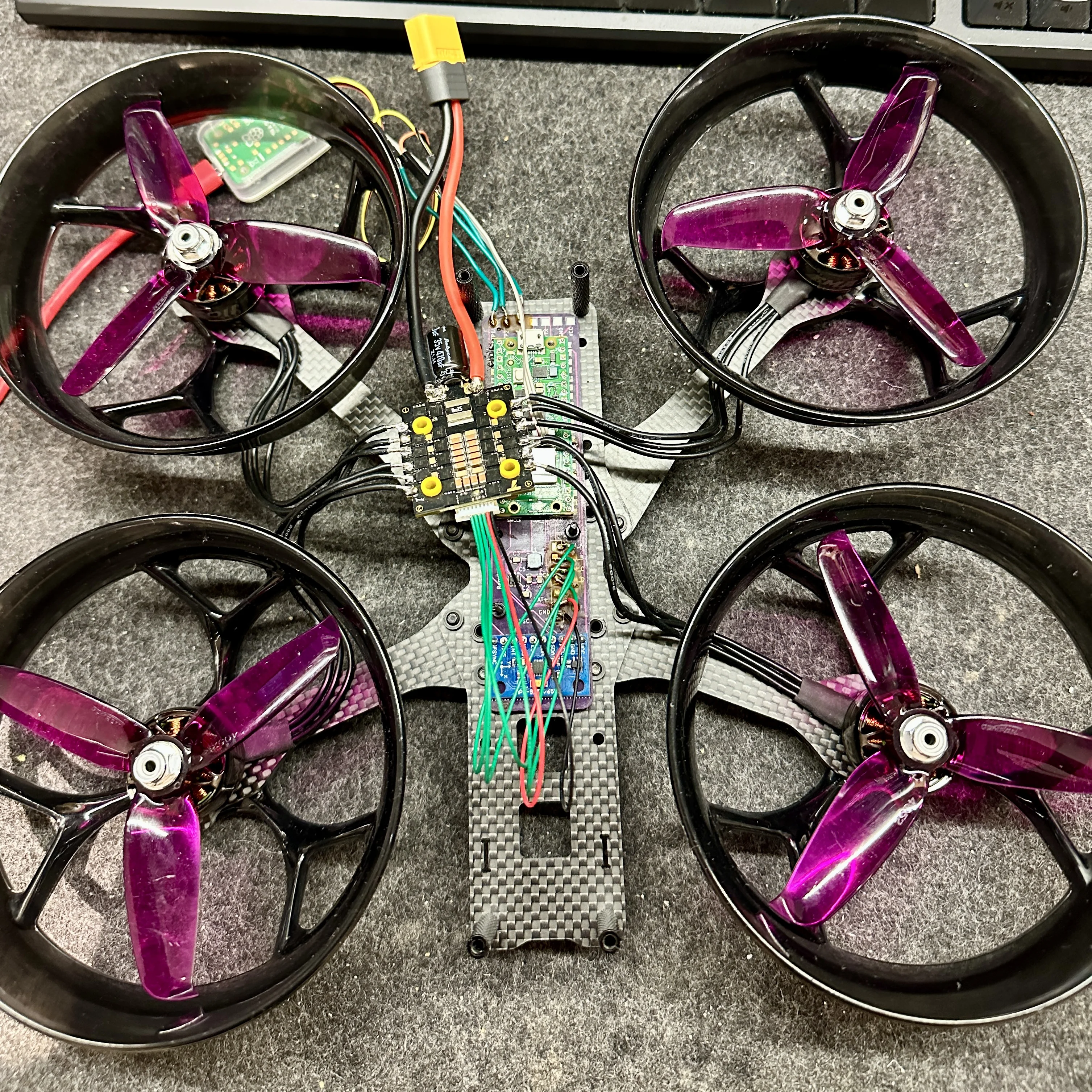
I developed a drone from the ground up for the Cornell Motion Capture Studio, advised by Prof. Brian Kirby. Intended for use in various ECE/MAE classes, the drone’s flight controller is designed to be based on the Raspberry Pi Pico W, and its flight software is written in pure C. I developed the low-level libraries for the Electronic Speed Control (ESC), Inertial Measurement Unit (IMU) , the Radio Receiver. On top of these, I designed the sensor fusion filter system for denoising and state estimation, and a PID controller. I also designed the PCB.
Cornell SmallSat Mission Design School(SMDS 2023), Telemetry, Tracking and Command Lead
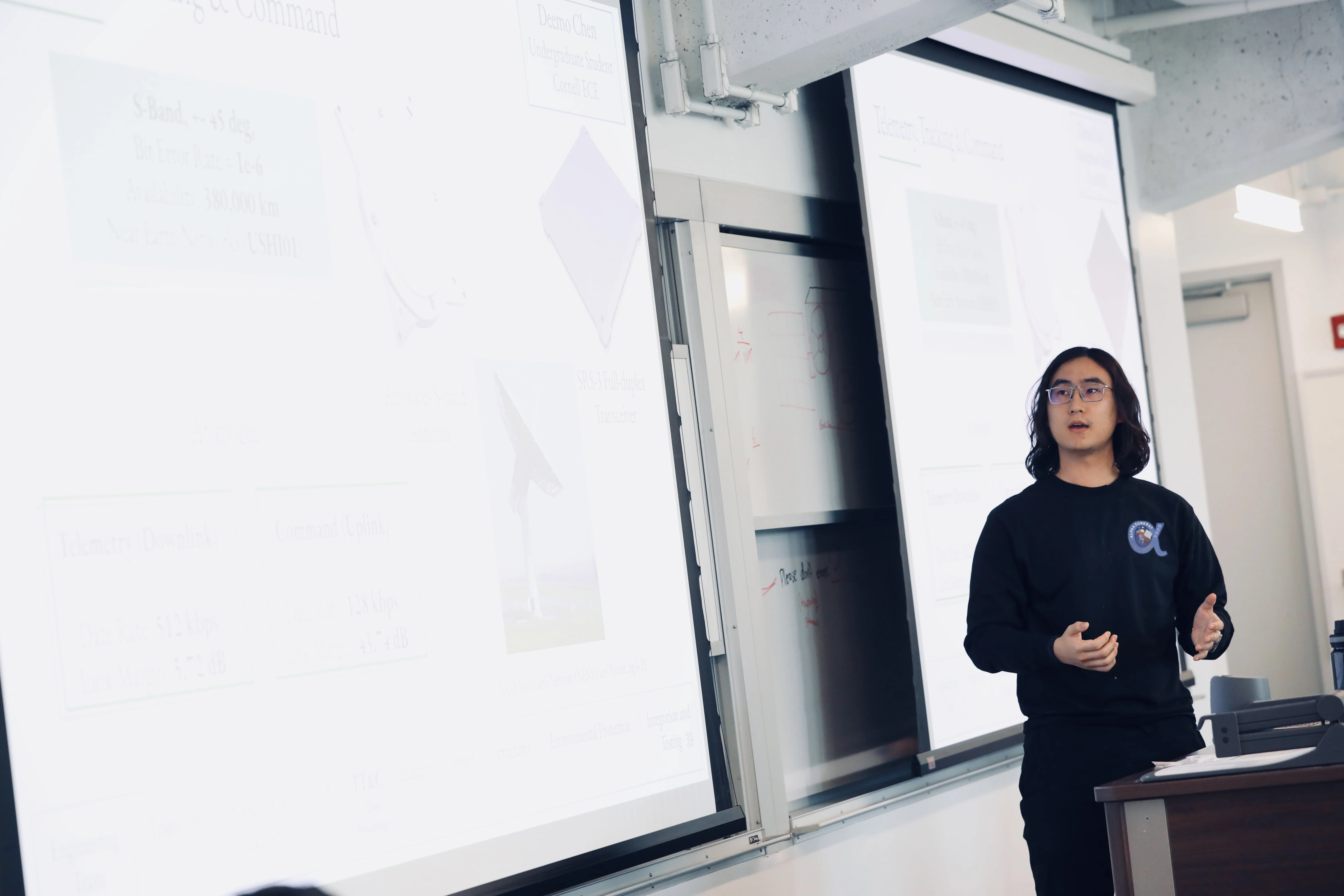
I served as the Telemetry, Tracking, and Command (TT&C) Lead for the STARLITE(Superluminous Tomographic Atmospheric Reconstruction with Laser-beacons for Imaging Terrestrial Exoplanets) mission in the SMDS program. I collaborated with engineers and scientists around the world on a small satellite mission following the standard of the NASA Pioneer program. My work involved devising innovative methods for long-range communication and tracking, with these strategies being subsequently validated by Link Budget calculations.
Cornell University, Teaching Assistant
I TAed for ECE 2720: Data Science for Engineers for Prof. Aaron Wagner, during which I held weekly Office Hours, graded/created assignments, and answered questions.
Projects 🛠️
“PICOBOI”: RP2040 Based Handheld Gaming Device w/ GPS
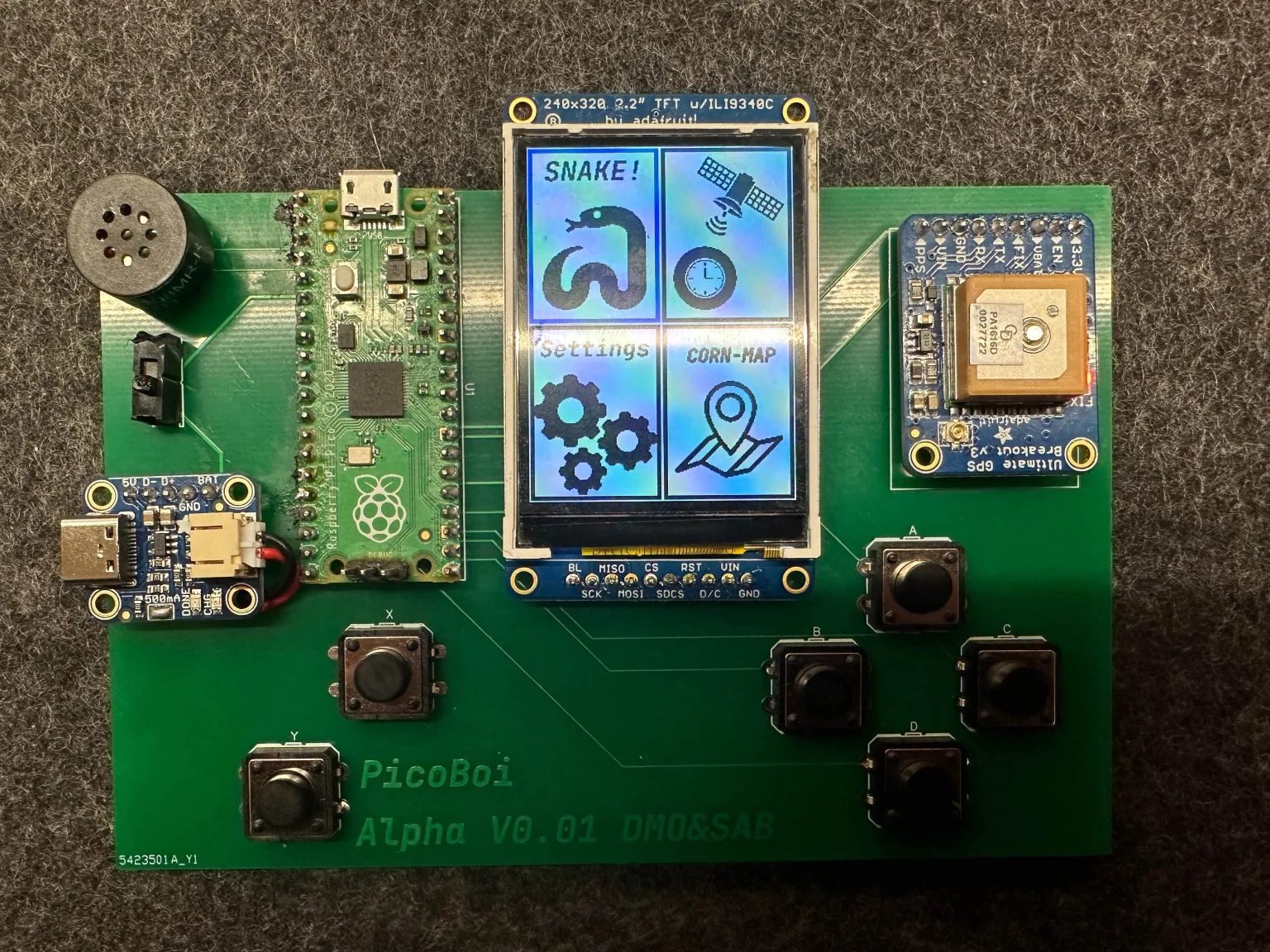
“PicoBoi” is a Gameboy-like device with modern features. Its hardware includes a charging system, speaker, GPS module, button pad, and screen.
With the cooperation of PicoBoi’s software, a multi-threaded environment that supports isolation of applications coded with C, users can access or create different applications without interference. A unique snake game has been developed, in which the snake can move diagonally while original retrospective music plays in the background, and the difficulty level can be adjusted in the settings. Additionally, a library has been designed for the GPS module, as the official library is designed for Arduino boards. With the GPS module, users can obtain accurate time from the satellite and track their location on the map.
This project is published on Circuit Cellar (Dec 2023 Issue#401, Pg 12-18)
“TidyPlotter”: Image Sketcher with a Robust Design
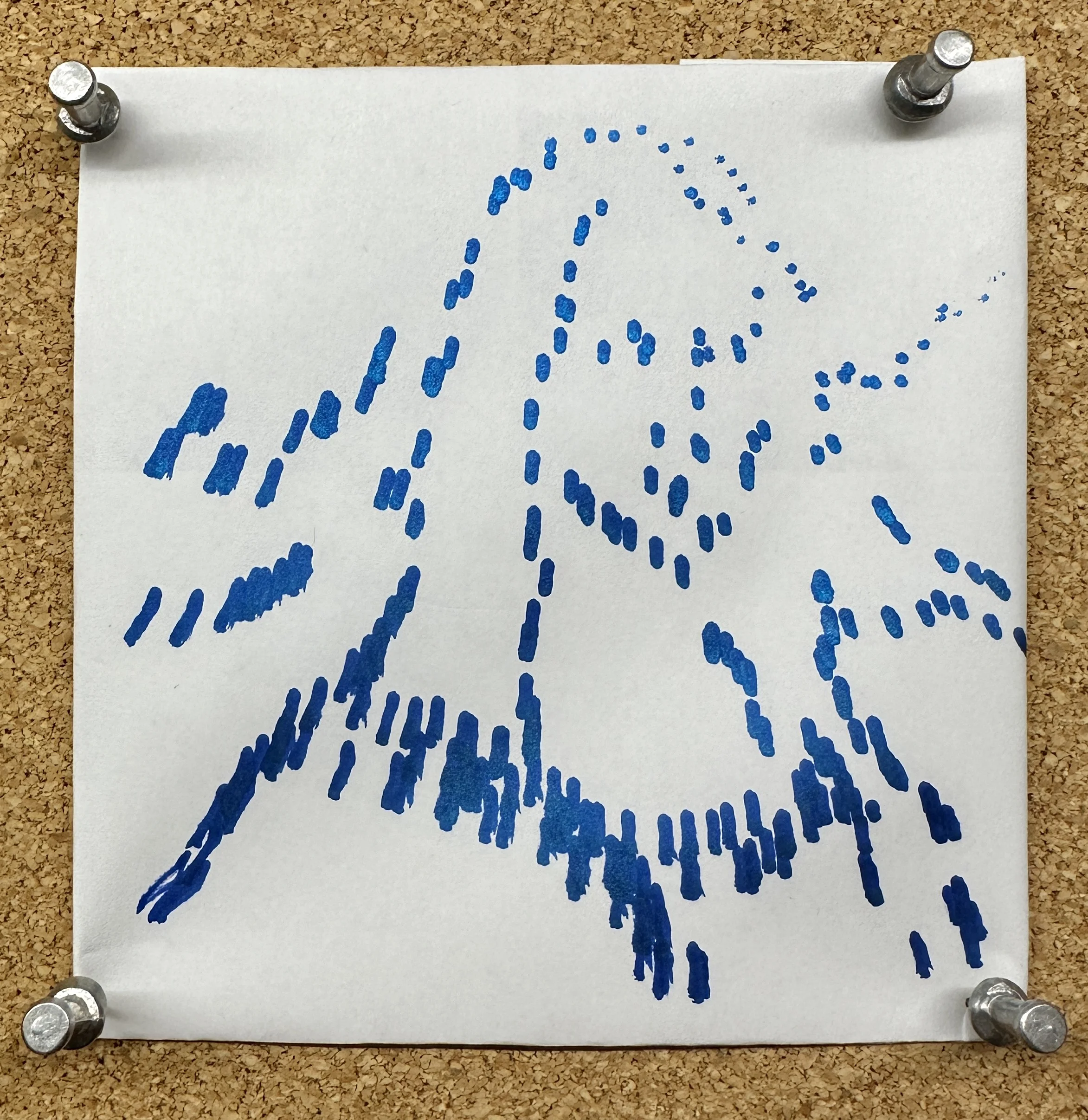
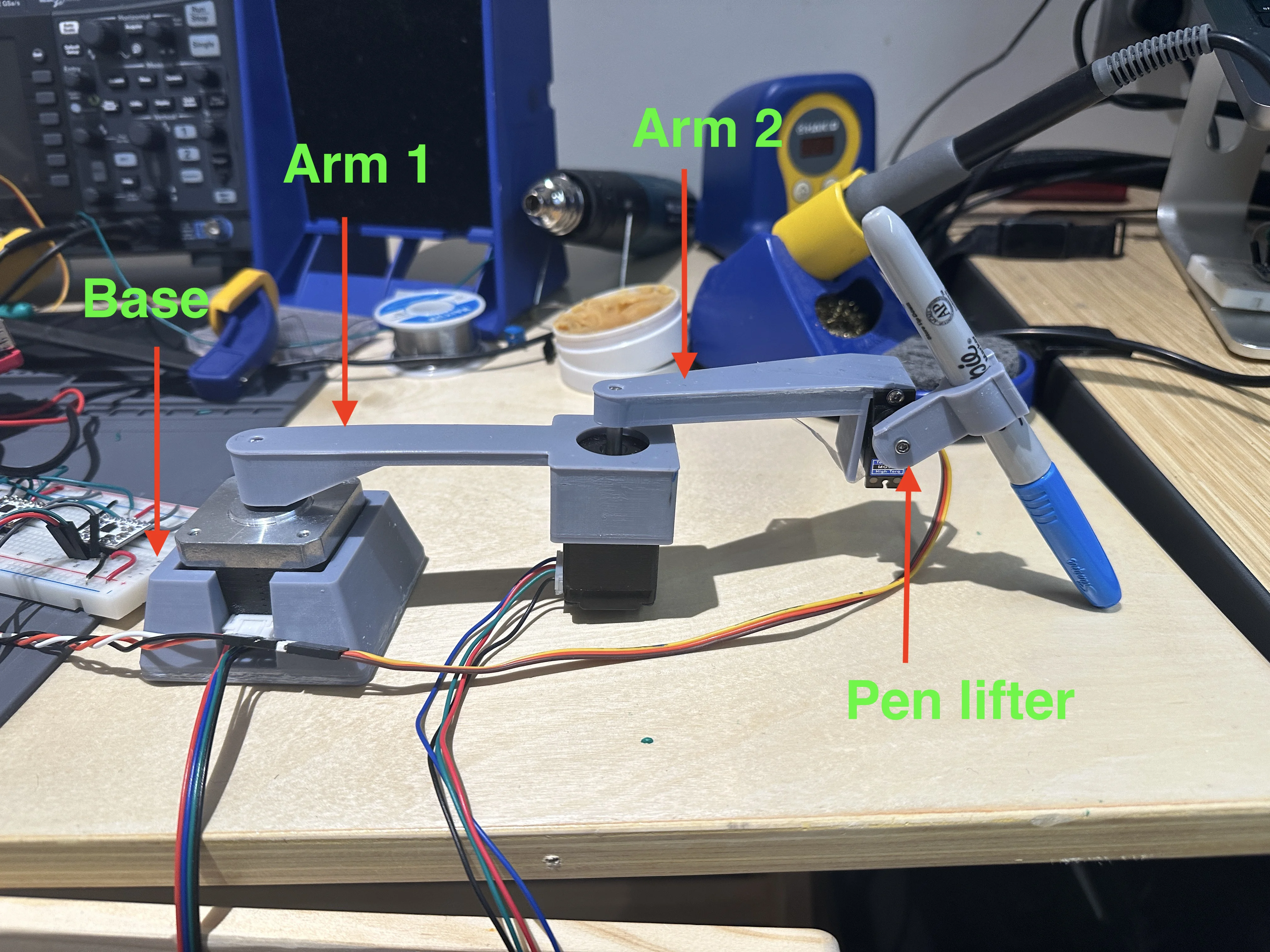
“Tidy Plotter” is a 2-D drawing machine that uses a robotic arm design to reproduce jpeg or png images on flat surfaces. It’s built with 3-D printed arms, two stepper motors, and a servo motor. The software, using OpenCV for image processing, translates the images into a series of points for the plotter to follow.
“GHOSTGPT” CLI/TELEGRAM CHATBOT WITH GPT/DALL-E
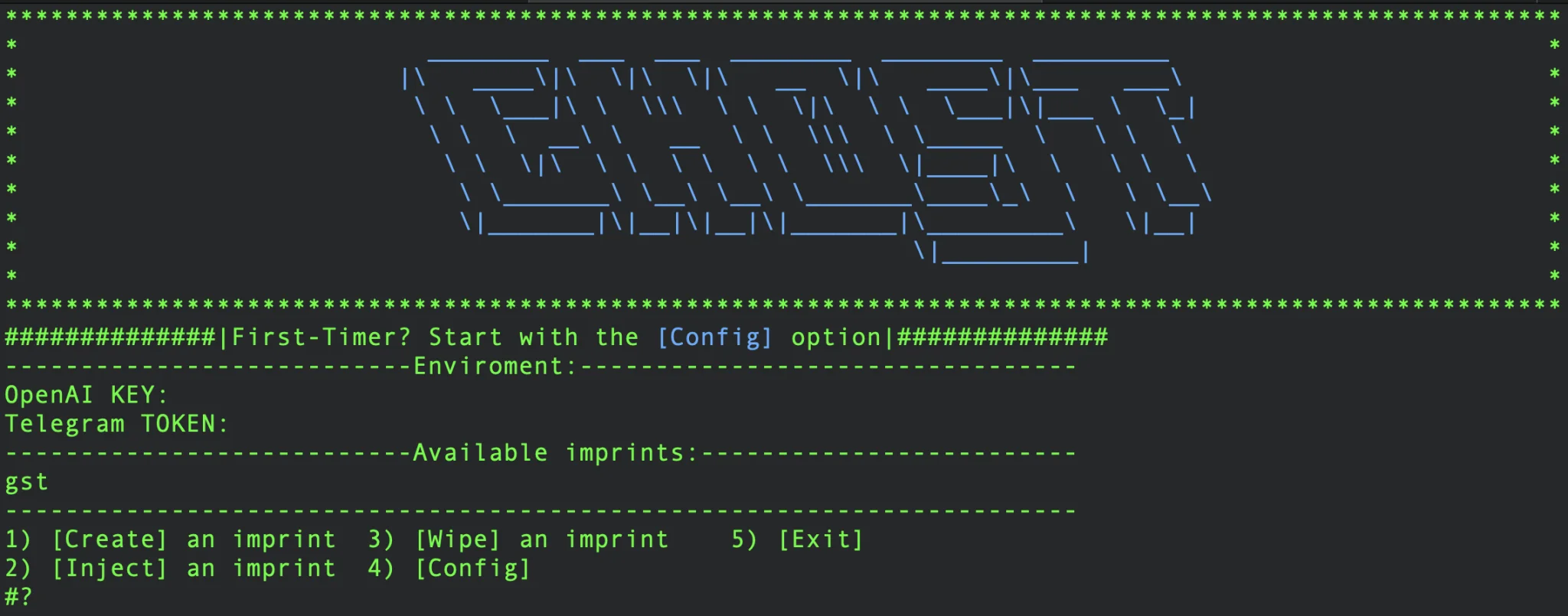
“GhostGPT” is a muti-platform GPT/DALL-E based ChatBot/Image Generator. With Ghost, you can create locally stored ‘neural imprints’ (.ni files) which for now are basically chat histories that shape Ghost’s behavior. And you can also load imprints created by other people into Ghost to give it different personalities or features.